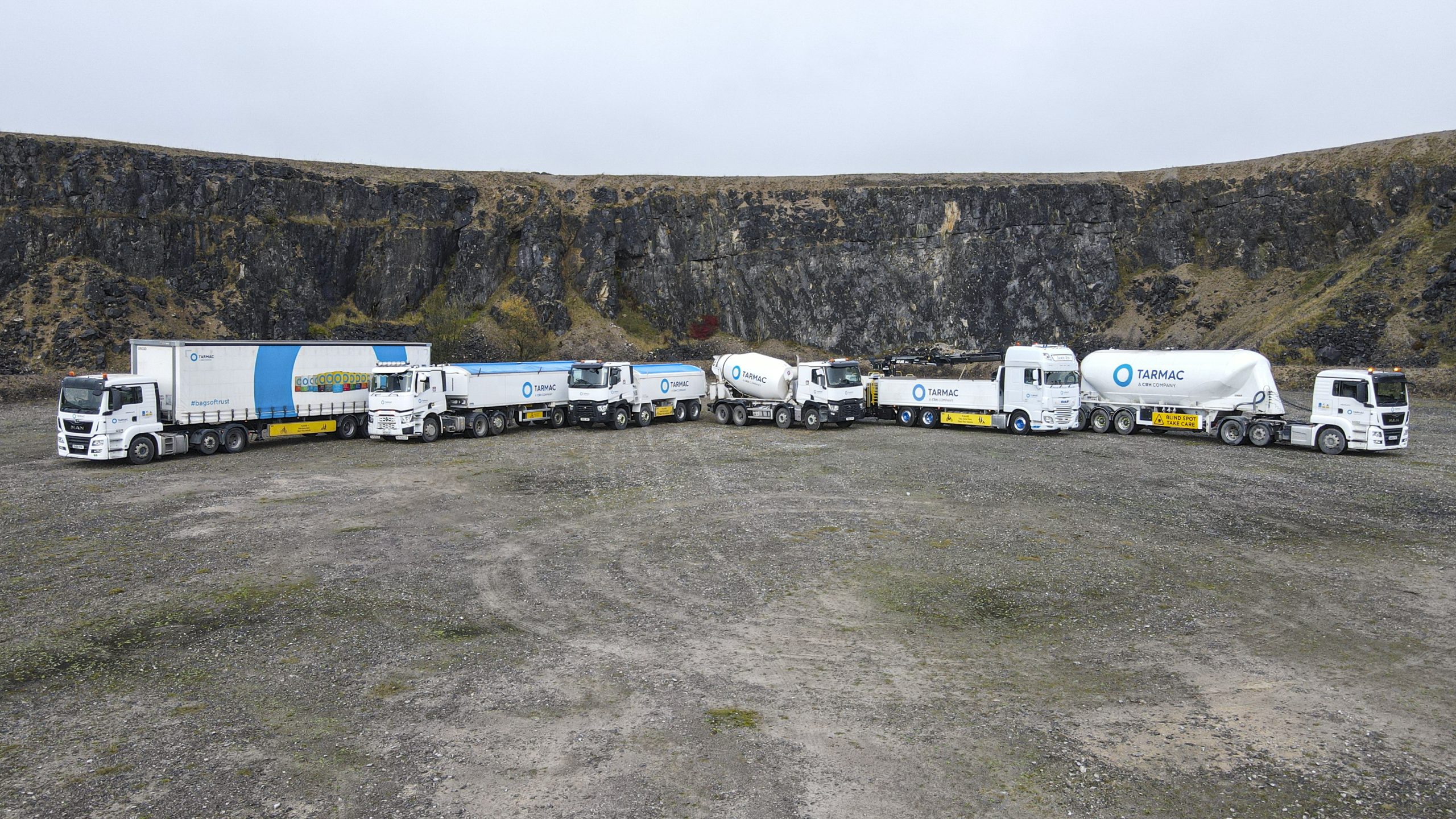
Advancing Zero‑Emission Logistics Through eFreight 2030
“We are delighted to join the eFreight 2030 consortium, reiterating our commitment to our sustainability goals and reducing emissions across our logistics network.”
Ben Garner, Head of Logistics at Tarmac
Progress toward lower carbon logistics accelerated in 2025 as Tarmac advanced plans to deploy a fleet of electric Heavy Goods Vehicles (HGVs) capable of transporting cement, asphalt, aggregates and concrete blocks. This work supports Tarmac’s wider ambition to reduce CO₂ emissions by 30% by 2030 and reach net zero before 2050. Tarmac’s involvement in the eFreight 2030 consortium forms part of the UK Government’s Zero Emission HGV and Infrastructure Demonstrator Programme, which is delivering a national rollout of 100 electric HGVs and 32 charging locations. As part of this initiative, Tarmac will introduce five electric HGVs into its operations.
Building the UK’s First Construction‑Ready eHGV Network
To support the introduction of these vehicles, Tarmac is developing a new electric charging network across London and the South East. Delivered in collaboration with the eFreight 2030 consortium and British charging specialist Voltempo, this network will include high‑capacity charging systems at key Tarmac sites. These systems will allow vehicles to charge while loading or offloading materials, enabling efficient use of time on site and creating a scalable foundation for future zero‑emission logistics. This model will help match the duty cycle of Tarmac’s existing fleet and support the reliable movement of materials into major construction and infrastructure projects.
Supporting Veterans into Fulfilling Careers
Through close collaboration with armed forces organisations, Tarmac supports veterans and reservists as they transition into civilian careers, providing flexibility for training commitments and acknowledging the leadership, resilience and transferable skills they can contribute.
How the Initiative Is Making a Difference
As part of eFreight 2030, Tarmac will add five electric HGVs equipped with a range of trailers to support the movement of cement, aggregates, asphalt and plant. These vehicles will deliver zero tailpipe emissions, helping reduce the environmental footprint of construction logistics. The development of a high‑capacity charging network will enable these vehicles to operate effectively by integrating charging into existing loading and unloading activities. The project will also demonstrate how electric vehicles can perform in demanding, high‑payload construction use cases. These investments build on earlier electrification steps, including Tarmac’s growing electric mixer fleet, and align with its EV100 commitment to transition all company cars and vans to electric by 2030.
Partnerships Driving Innovation
Partnership is central to the success of eFreight 2030. TVS Interfleet company Wilcox Commercial Vehicles will supply one of the trailers for aggregate asphalt movements, equipped with a new Tipper Active Safety System designed to improve safety during tipping operations. The five eHGVs, four Renault Trucks and one DAF, will also join Tarmac’s eDiscovery Programme, which enables supply chain partners to lease an electric truck for six months and evaluate performance before making long‑term investment decisions.
Partner reflections
“We are delighted to join the eFreight 2030 consortium, reiterating our commitment to our sustainability goals and reducing emissions across our logistics network. At Tarmac, we are focused on delivering innovative, lower carbon solutions that support our transition to net-zero, and our partnership with TVS Interfleet and our OEM partners enables us to continue our drive toward decarbonising the construction sector.”
Ben Garner, Head of Logistics at Tarmac
Andrew Scott, Product Director at TVS Interfleet, said:
“Joining eFreight 2030 enables us to extend the partnership with Tarmac which saw us develop the UK’s first electric concrete mixer. We look forward to working again with Tarmac to demonstrate a more sustainable future for the construction industry.”
Michael Boxwell, CEO at Voltempo, said:
“We are delighted to welcome Tarmac and TVS Interfleet to the eFreight 2030 consortium. The addition of electric construction vehicles to the programme represents an exciting milestone and helps extend the reach of electric HGVs into demanding transport sectors.”
Looking Ahead
Tarmac’s participation in eFreight 2030 represents an important step in building a fully integrated, lower carbon logistics network across the UK. The introduction of new eHGVs, supported by a purpose‑built charging network, will provide valuable insight into the operation of electric vehicles in complex, high‑demand construction environments. These learnings will help inform future fleet investments, strengthen Tarmac’s ability to deliver lower carbon, multimodal logistics solutions and support the wider transition toward net‑zero construction. As the programme progresses, Tarmac will continue to work with consortium partners to scale up zero‑emission transport and develop cleaner, more efficient logistics options for customers and supply chain partners.