OUR SUSTAINABILITY STRATEGY
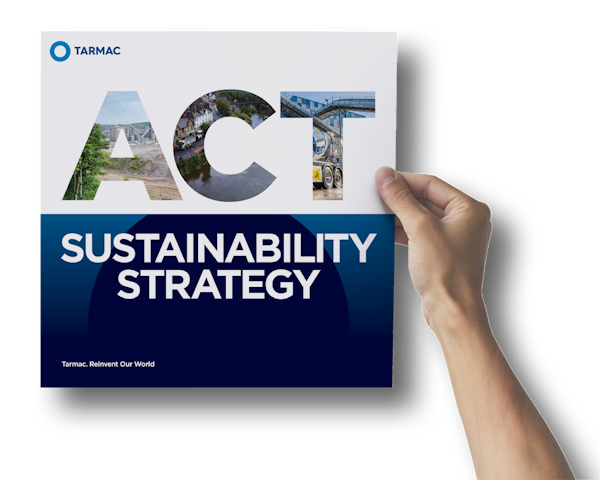
This sustainability strategy, launched in 2021, sets out the third phase of our sustainability journey, covering the next 10 years and beyond. It builds on the significant progress we have made to date and our recognition of the challenges ahead.
Our strategy is founded on whole life thinking and pushing the boundaries to develop innovative solutions, which help our customers create more sustainable buildings and infrastructure. Our strategy aims to ensure Tarmac continues to remain well positioned to meet sustainability challenges now and, in the future, and support our customers and communities to do the same.
It builds on our previous achievements, prioritises the issues that are most important to our business and our stakeholders and defines long term commitments and goals under 3 key themes; People, Planet and Solutions.
We aim to embed sustainability into everything we do. Tarmac’s Executive Committee is responsible for setting, delivering and reviewing the strategy to ensure its continuing appropriateness and high level of ambition, with actions and programmes delegated to business units and functions.
Tarmac’s sustainability priorities are informed through a regular materiality process aligned with our parent company, CRH.In 2023, we completed our first Double Materiality Assessment, identifying the most important sustainability issues for CRH, and our stakeholders, as well as examining how external sustainability factors impact our business. This process incorporated the materiality requirements of the Global Reporting Initiative (GRI) and the Sustainability Accounting Standards Board (SASB) and aligned with reporting requirements across environmental, social and governance (ESG) indices. We also drew upon our Enterprise Risk Management (ERM) process, which is embedded throughout our business and provides a structured approach for the identification and management of CRH's most material impacts, risks and opportunities.
The assessment was undertaken with the assistance of an external specialist and was included in the AA1000 assurance process. The outputs have been presented to the SESR Committee, a committee designated by CRH's Board of Directors with the responsibility for monitoring developments related to sustainability risks, and providing strategic direction, oversight and risk assurance. Building on the formal Materiality Assessment process completed in 2023 and the dynamic assessment in 2024, in 2025, we completed an independent dynamic assessment using specialists to identify any material changes across the specific aspects of sustainability. This consisted of a high-level desktop review of corporate disclosures, media coverage, rating agencies, legislative changes, and CRH internal perspectives. Through this dynamic assessment process, we determined that our 16 material topics remain the most significant sustainability topics for CRH. This strengthened approach ensures we focus on and transparently report the issues that matter most, such as water, circularity, decarbonisation, empowered employees, and inclusion and engagement, and supports our ability to create value across the built environment and for wider society.
